
Review · OSLO
Oslo: Best of Oslo Walking Tour & Fjords Sightseeing Cruise
Oslo gives you two very different shows in one afternoon: a compact city of grand public buildings, then a fjord dotted with islands and summer homes. This four-hour outing connects both without making you arrange separate tickets or figure out the waterfront on your own. Csilla, one of the guides, is singled out for her helpful, well-informed approach.
I like the balance of a two-hour walking tour and a two-hour boat ride. I also like the small group, limited to 10 people, which should make it easier to hear the guide and ask questions. The main drawback is pace: four hours is enough for an introduction, but not enough to visit the museums or spend much time inside the landmarks.
Key points
- Starts at University Aula: Meet near the statue of P.A. Munch on Karl Johan Street for the 10:00 AM departure.
- Covers Oslo’s central symbols: See Parliament, Grand Hotel, Karl Johan, the Opera House, Christiania, and City Hall.
- Includes a two-hour fjord cruise: Sail among islands, narrow channels, bays, and shoreline landmarks.
- Small group of up to 10: A useful format for questions and a closer connection with the guide.
- Historic and modern Oslo together: The walk deals in royal, civic, and city history, while the cruise reveals Oslo’s maritime setting.
- Audio support in five languages: English, Spanish, French, Italian, and German audio guides are included.
Starting at University Aula on Karl Johan
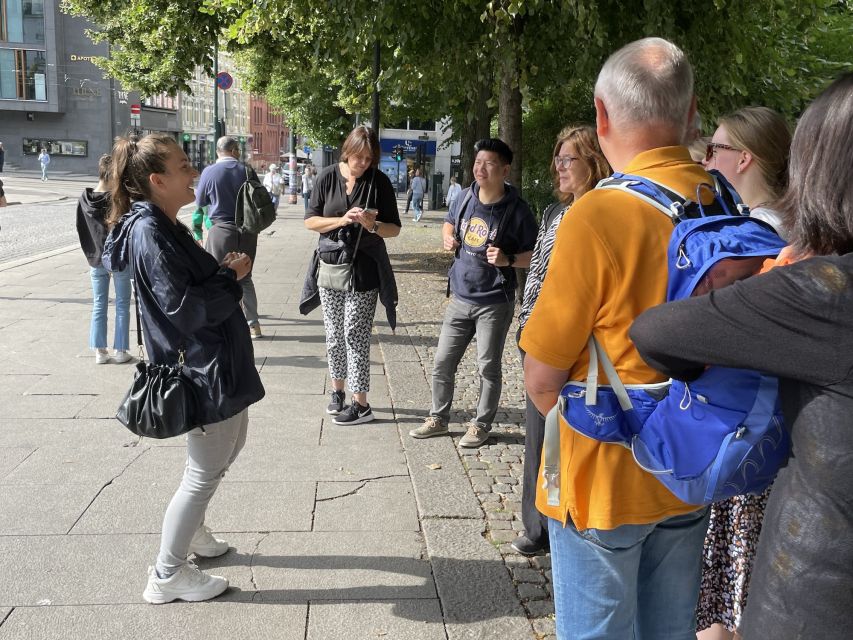
Your day begins at University Aula, Karl Johan Street 47, near the statue of P.A. Munch by the entrance. The listed departure is 10:00 AM, so arrive ready to walk rather than treating the meeting point as a place to linger.
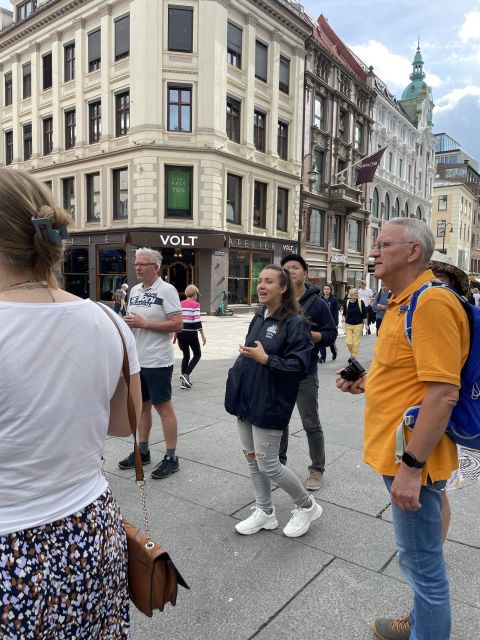
The route begins in central Oslo, where the architecture gives you a quick lesson in the city’s public life. The guide explains the major buildings and the stories attached to them, helping you see more than façades and street names. The group is capped at 10, a real advantage on city streets where a large crowd can easily scatter.
Wear comfortable shoes. You will be on foot for two hours, and the walk includes several stops rather than one long talk in a single spot. Bring a charged smartphone as well. The mobile sightseeing app is included, and an umbrella is sensible in Oslo, where a gray sky can change the feel of an outdoor tour quickly.
The tour is offered in English with a live guide. The supplied audio guide can also be used in English, Spanish, French, Italian, or German. That combination is useful if someone in your group prefers extra listening support, though the live walking commentary is in English.
More Fjord Cruises in Oslo
- Oslo: Oslo Fjord Sightseeing Cruise by Sailing Ship
★ 4.5 · 5,790 reviews - Oslo: Scenic Fjord Cruise with Audio Guide Commentary
★ 4.5 · 5,375 reviews - Oslo: 100% Electric Oslofjord Sightseeing Cruise
★ 4.4 · 2,041 reviews
Parliament, Grand Hotel, and the city’s main street
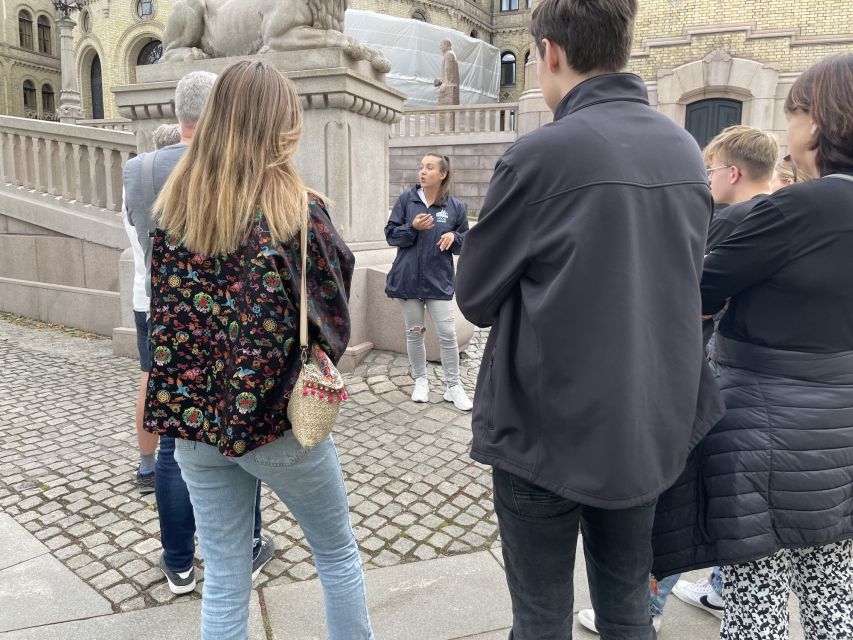
The first part of the walk takes you through the civic and ceremonial center of Oslo. The Norwegian Parliament is an important stop because it gives the city tour a clear political anchor. You are not simply looking at a handsome building; you are seeing the place connected with Norway’s national democracy.
The Grand Hotel adds a different note. Its elegant exterior and central position help explain the formal character of this part of town. Along Karl Johan Street, the guide brings together the city’s public buildings, shopping street, and daily activity.
This is a good section for first-time visitors who want a quick mental map. Oslo’s center is manageable, but its buildings can feel disconnected when you see them without context. A guide can tie the Parliament, hotel, street, and later City Hall into one story.
You will hear about Oslo’s nickname, the Tiger City. That detail gives the walk some personality and offers a memorable way to connect the modern capital with its older identity. It is the sort of small piece of local language that can make the city easier to remember after the tour ends.
The Opera House and Oslo’s modern face
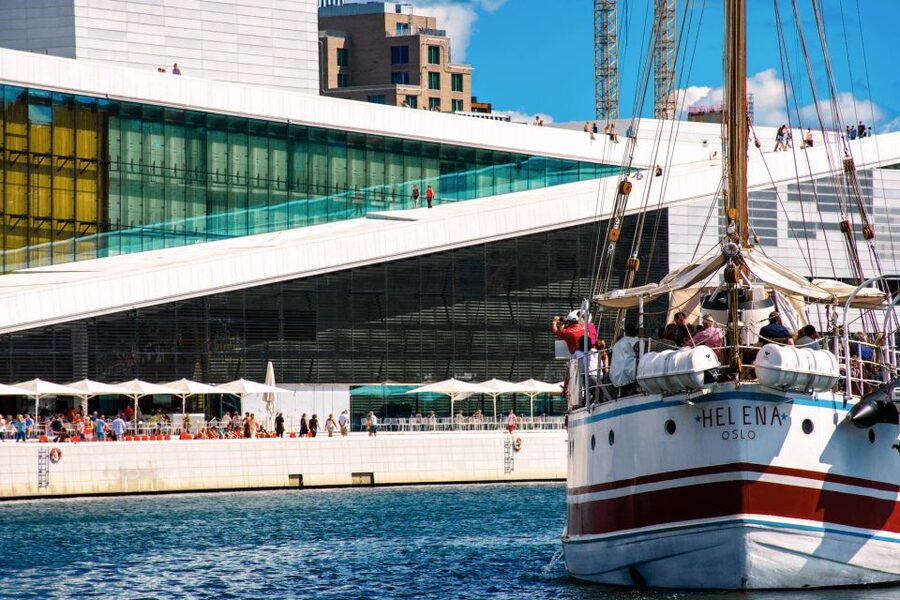
The Norwegian Opera House is one of the walk’s most striking visual stops. Its design encourages people to walk over and around the building, and from the outside it reads as a major piece of modern architecture rather than just another performance venue.
The walking tour lets you see the Opera House in the context of the older city center. That contrast is one of the strongest parts of the experience. In a few hours, you move from Parliament and the Grand Hotel to a building that reflects Oslo’s newer cultural ambitions.
The Opera House also returns during the cruise, where you see it from the water. I like that repetition. The first view gives you the building at street level; the second shows how it sits beside the harbor. Different angles make the structure easier to appreciate, and they help you understand Oslo as a city shaped by both land and water.
The walking section does not include a performance or an extended interior visit. Plan on viewing the landmark from the outside and hearing the guide explain its role and design. If your main goal is to spend time inside Oslo’s cultural institutions, you will need a separate plan.
Christiania and the name of old Oslo
The route continues toward Christiania, Oslo’s historical core. Here the guide explains the story behind the name change that shaped the city’s identity centuries ago. This stop adds a layer of time to the tour, showing that Oslo has not always been known by its present name or understood in its current form.
Christiania is especially useful for visitors who want more than a photo checklist. The guide’s job here is to connect streets and buildings with the city’s changing story. Since the walk is short, you will get an overview rather than a full historical study, but the stop gives you a reason to pay attention to the older parts of central Oslo.
The value lies in the explanation. Without it, a quick walk through the area could feel like a series of attractive streets. With the name change and city development in mind, you have a clearer sense of how Oslo evolved.
Same fjords, seen another way:
- Oslo: Fjord Evening Cruise with Shrimp Buffet
★ 4.5 · 1,956 reviews - Oslo: Guided Sightseeing Fjord Cruise on Premium Silent Boat
★ 4.7 · 1,826 reviews - Guided Sightseeing Cruise on Oslofjord by Premium Silent Boat
★ 5.0 · 730 reviews - 2-Hour Oslo Fjord Sightseeing Cruise by Sailing Ship
★ 4.0 · 694 reviews
City Hall and the Nobel Peace Prize
The walking tour finishes at City Hall, one of Oslo’s most important civic landmarks. This is where the Nobel Peace Prize ceremony takes place, giving the building a significance that reaches far beyond its large brick walls and waterfront setting.
City Hall is a fitting end to the walking portion because it brings together the themes introduced earlier: government, public life, culture, and Norway’s place in the world. The guide provides the context; you get the chance to see the location where a major international prize is presented.
The stop is also practical. City Hall sits close to the waterfront, making it a natural bridge between the city walk and the cruise. Instead of ending in one part of town and requiring you to find another departure point, the experience moves from central Oslo toward the harbor as part of one connected outing.
The exact transfer arrangement between the walking route and boat is not detailed, so follow the guide’s instructions on the day. Keep your ticket and phone handy, especially if the walking tour and cruise use separate boarding procedures.
Leaving the city behind on the fjord cruise
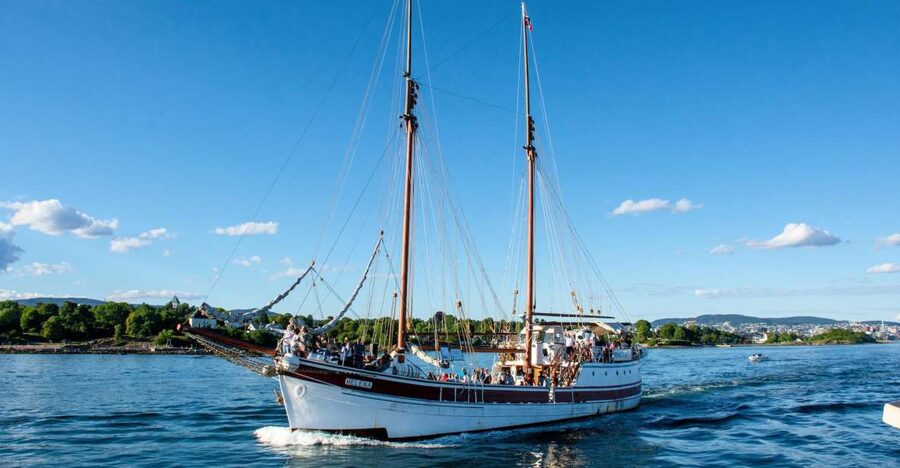
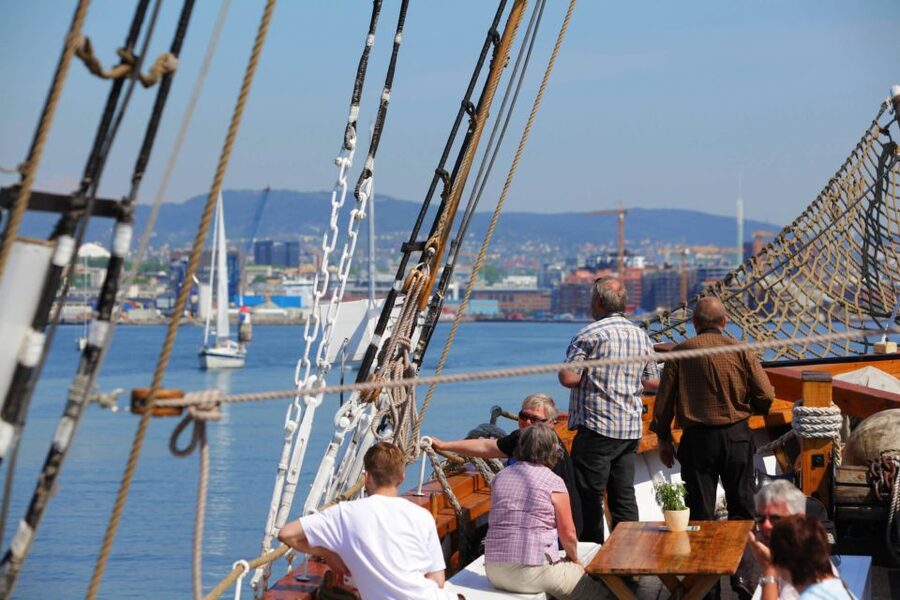
The second half lasts two hours and uses a historic vessel. From the boat, Oslo opens out into a pattern of slender straits, small bays, and islands with summer homes. The change in pace is welcome after the walking section. You can sit, watch the shoreline, and take photographs without having to keep up with a group on foot.
The cruise is designed for sightseeing, not transportation. You are there to see how Oslo’s coastal setting shapes the city. The boat passes through narrow channels and peaceful coves, offering views that are difficult to get from central streets.
An open-top vessel is listed among the highlights, so dress for exposure to wind and changing weather. The boat ride may feel very different on a clear day than on a damp one. Bring that umbrella, and carry an extra layer if you are sensitive to cool air on the water.
The cruise also has a useful visual rhythm. You see open stretches, tighter passages, islands, and developed shoreline. That variety keeps the two hours from becoming one long, unchanging view.
Hovedøya, Dyna Lighthouse, and the island views
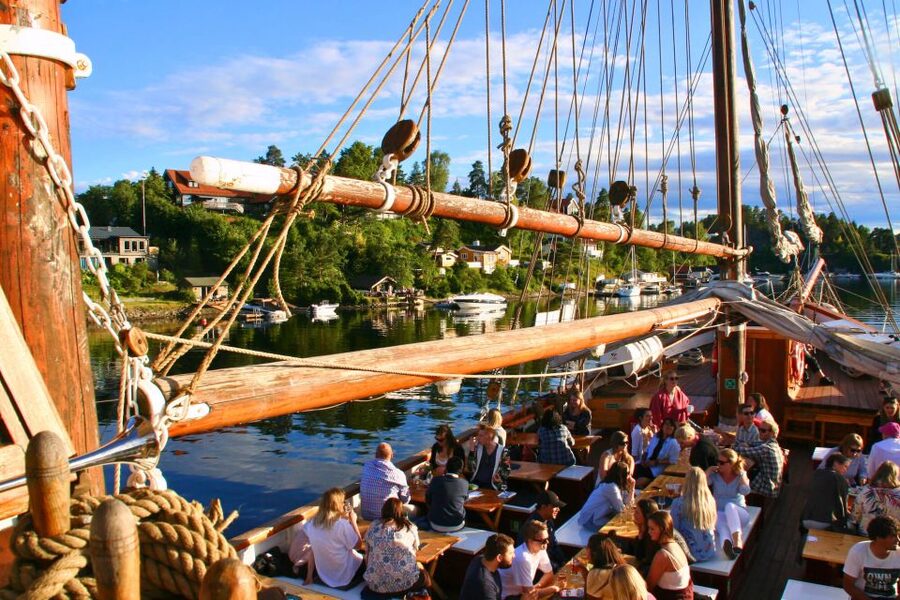
Hovedøya is one of the islands featured along the route. You will see it from the boat rather than explore it on foot, so think of this as a scenic introduction, not an island visit.
The same applies to Dyna Lighthouse. The lighthouse adds a distinct point of interest as the vessel moves through the fjord. Small landmarks such as this help give shape to the boat ride and provide good subjects for photographs.
The cruise passes charming summer homes and quiet coves, showing a calmer side of Oslo than the central streets. This is one of the experience’s best contrasts. The city walk explains civic Oslo, while the boat reveals a more leisurely coastal setting.
You should keep your camera ready, but do not spend the whole ride looking through a screen. The value of the cruise is the changing view from one moment to the next, and the open-top setting gives you a broad view rather than a fixed window frame.
Bygdøy, Huk beach, and the museum shoreline
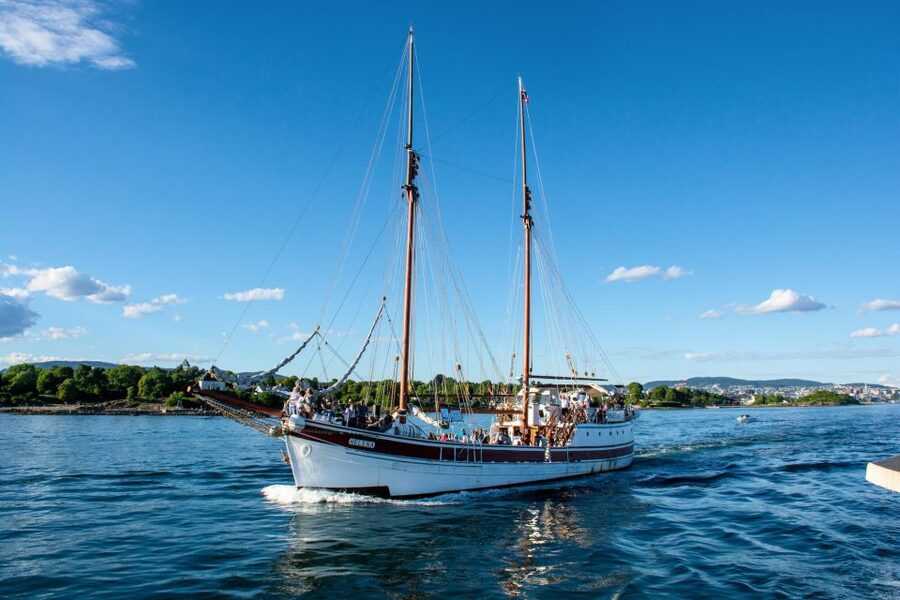
As the boat approaches Bygdøy peninsula, you will see a part of Oslo known for museums and beaches. Huk beach is one of the shoreline landmarks mentioned on the route, giving you a glimpse of the city’s recreational side.
The Maritime Museum is visible along the waterfront, with vintage sailing ships anchored outside. That view links Oslo’s present-day tourism with its seafaring past. You do not go inside during this cruise, but the exterior display gives you a useful reason to return if maritime history interests you.
The Fram Museum is another major sight near Bygdøy. It presents the famous polar exploration vessel Fram, which is also visible as part of the peninsula’s museum area. Again, the cruise offers an outside view, not admission to the museum.
This section can help you plan the rest of your Oslo stay. If the shoreline views catch your attention, Bygdøy is a sensible place to visit separately. The four-hour outing gives you an overview, but it cannot replace time in the museums themselves.
What the $82 price gets you
At $82 per person, the price is easiest to judge as a combined city-and-water package. You get a two-hour guided walk, a two-hour fjord sightseeing cruise, and access to the sightseeing mobile app. Booking two separate activities could cost more or require extra time and coordination, though the exact comparison depends on current local prices.
The strongest value is convenience and coverage. In one four-hour block, you see the central landmarks, hear their stories, and then reach the fjord for a completely different view of Oslo. If you have limited time in the city, that range matters.
The price is less compelling if you want depth at any one stop. There is no stated museum admission, performance ticket, or extended interior visit. You are paying for orientation, guiding, and scenery rather than a series of paid attractions.
A small group improves the value. Ten people or fewer is a much more personal setup than a large city procession, especially when the guide is explaining details near busy streets. One review specifically praises Csilla as helpful and well informed, and also describes the boat portion as offering a good variety of sights and a pleasant choice of viewing options.
The overall rating is 4.2 from 24 reviews. That points to a generally strong experience, while also reminding you that this is a straightforward introduction to Oslo, not an exhaustive city program.
Who should book this Oslo combination?

I would recommend it to a first-time visitor who wants a clear overview without spending a full day on organized sightseeing. It suits you especially well if you enjoy learning the story behind buildings, then relaxing on the water afterward.
It is also a good match for couples, solo visitors, and small families who value a limited group. The four-hour length leaves room for dinner, another museum, or independent wandering later in the day.
You should consider it if you are deciding between a walking tour and a fjord cruise. You do not have to choose. The experience gives you both, and the contrast is the main reason to book.
It may not suit you if you dislike fixed schedules or want to explore each landmark at your own speed. The route is guided, the cruise has its own timetable, and the walking portion provides limited time for shopping, lingering, or entering attractions.
Accessibility is listed as wheelchair accessible. Comfortable shoes remain important, and a charged smartphone is useful for the included app. Free cancellation is available up to 24 hours before the activity for a full refund, and you can reserve now and pay later, which helps if your Oslo plans are still shifting.
Should you book this tour?
Book it if you want one efficient introduction to Oslo’s streets and fjord. The mix of Parliament, Karl Johan, Christiania, the Opera House, City Hall, Hovedøya, Dyna Lighthouse, and Bygdøy gives you a broad sense of the capital in four hours.
Skip it if your priority is museum interiors, a long visit at the Opera House, or an unhurried exploration of one neighborhood. For most first visits, though, the combination makes practical sense. You get useful city context from the guide, a calm two-hour cruise, and a small group that keeps the experience personal without taking over your whole day.
FAQ
How long does the Oslo walking tour and cruise last?
The complete activity lasts four hours. It includes a two-hour Best of Oslo walking tour and a two-hour fjord sightseeing cruise.
Where does the tour start?
Meet at University Aula, Karl Johan Street 47, near the statue of P.A. Munch by the entrance. Tours depart at 10:00 AM.
Where does the activity end?
The activity ends back at the meeting point.
What language is the live tour guide?
The live tour guide speaks English. Audio guides are included in English, Spanish, French, Italian, and German.
Is the experience wheelchair accessible?
Yes, the activity is listed as wheelchair accessible.
What should I bring?
Bring a charged smartphone, comfortable shoes, and an umbrella. The walk takes two hours, and the cruise includes outdoor sightseeing.
New on the fjords around Oslo
- 4 hours Best View of the Oslofjord Winter Edition★ 4.0 · 15 reviews
- Fjord Houseboat Cruise in Oslo. 100 % electric. BYO★ 5.0 · 3 reviews
- Private Oslofjord Island Hopping Tour★ 4.5 · 8 reviews
- Panoramic Peaks and Oslo’s Best Fjord Views Hike★ 3.0 · 2 reviews
- Private tour, Bergen to Oslo – Nærøyfjord Cruise & Flåm Railway★ 5.0 · 6 reviews
- Oslo Fjord a Mini Cruise by Wooden Sailing Ship★ 4.5 · 18 reviews
- Oslo Nature walks: Forest to Fjord★ 5.0 · 9 reviews
- Oslo’s Ultimate Fjord View Hike & Norwegian Waffle Workshop★ 5.0 · 4 reviews
Oslo Fjord Tours, the closest matches.
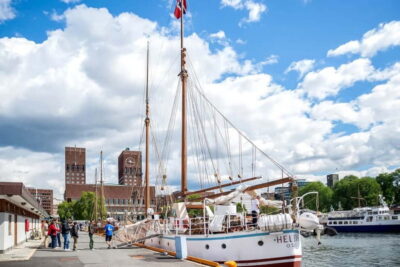
Oslo: Oslo Fjord Sightseeing Cruise by Sailing Ship
Read our review →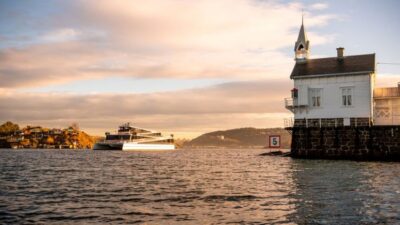
Oslo: Scenic Fjord Cruise with Audio Guide Commentary
Read our review →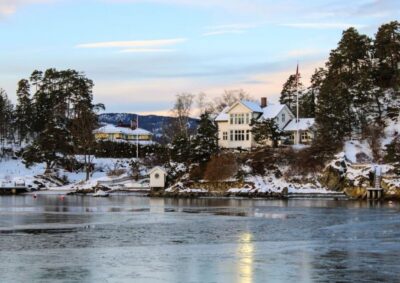
Oslo: 100% Electric Oslofjord Sightseeing Cruise
Read our review →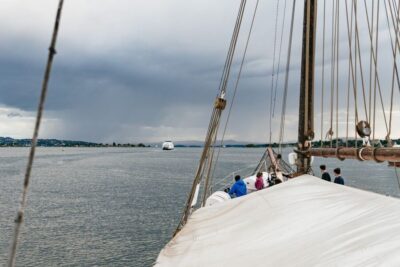
Oslo: Fjord Evening Cruise with Shrimp Buffet
Read our review →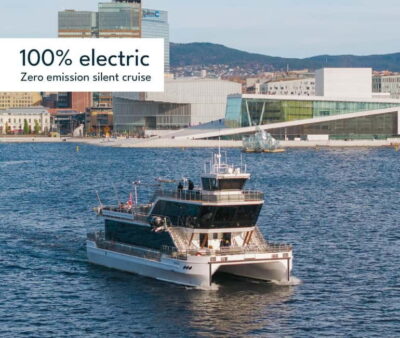
Oslo: Guided Sightseeing Fjord Cruise on Premium Silent Boat
Read our review →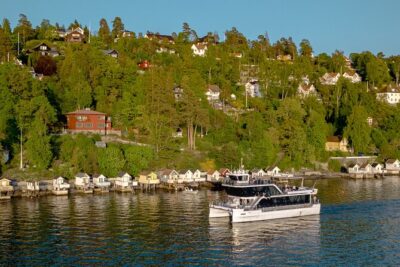
Guided Sightseeing Cruise on Oslofjord by Premium Silent Boat
Read our review →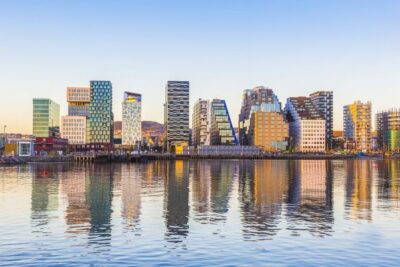
Oslo: Grand City Sightseeing Tour by Bus with Fjord Cruise
Read our review →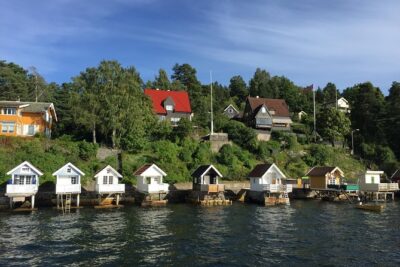
Oslo Combo Tour: Grand City Tour and Oslo Fjord Cruise
Read our review →Also listed under