
Review · ÅNDALSNES
Geiranger: Sky to Fjord Downhill Biking Adventure
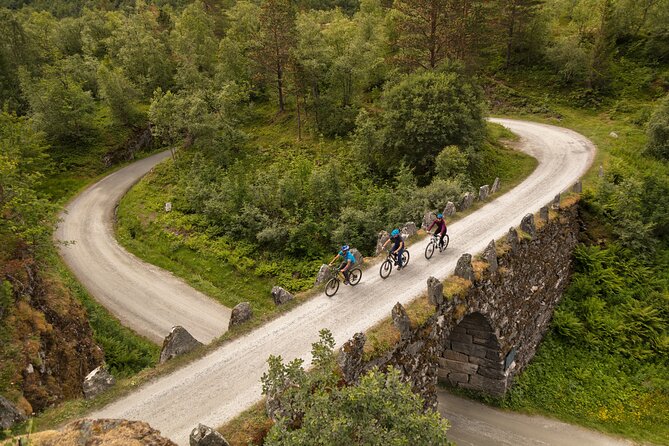
The best part of this ride is the simple idea: you start high beside Djupvatn Lake and coast down toward Geiranger, with mountains, waterfalls, valleys, and the fjord opening up below. Over about 16 kilometers, you get a moving view of some of Norway’s most famous scenery instead of seeing it through a bus window.
I like the freedom to stop whenever you want, and I like that the small group is limited to six people. The included bike, helmet, gloves, visibility vest, and air-conditioned ride to the start keep the outing easy to arrange. The main concern is just as important: this is an unguided ride on a public road with no shoulder or bike path in places, and large buses may pass close by.
- Djupvatn Lake start: Begin at 1,030 meters above sea level, with the long downhill run ahead.
- 16-kilometer route: Most of the ride is an easy coast, though there is a short uphill section.
- Major viewpoints: Stop at Blåfjell, Kvandalls waterfall, Opplenskedalen Valley, Knuten, and Flydalsjuvet.
- Small-group setup: A maximum of six people makes transport and equipment handling more personal.
- Unguided format: You ride independently, so you control the pace and photo stops.
- Safety concern: Check the brakes, tires, seat height, helmet fit, and visibility vest before setting off.
Starting High Above Geiranger at Djupvatn Lake
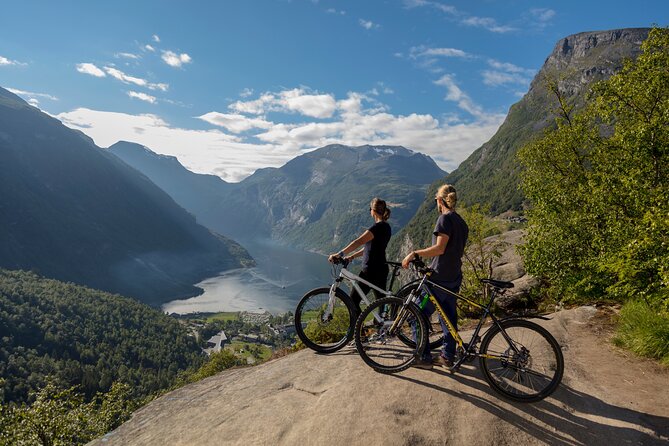
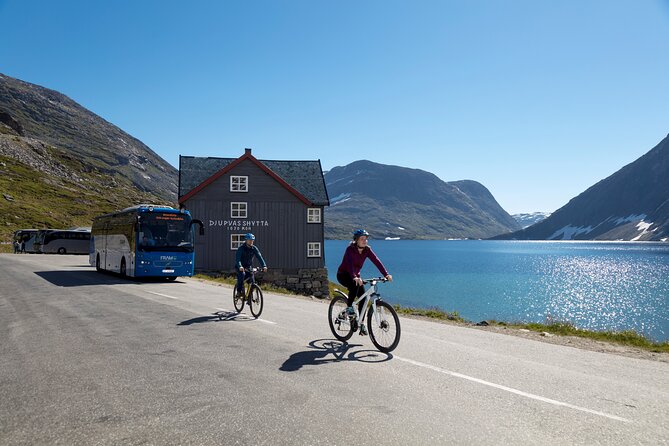
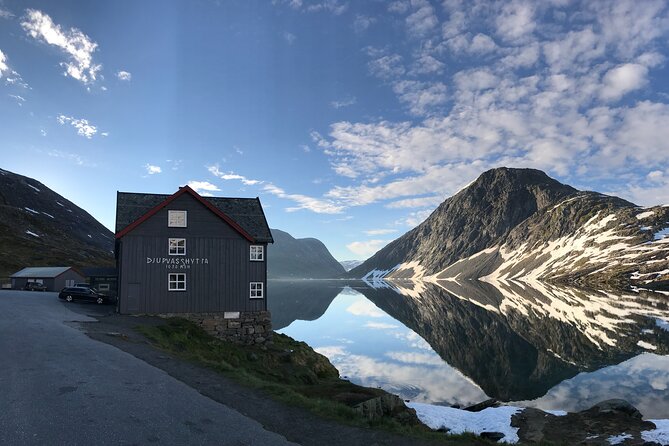
The outing begins at the meeting point on Geirangervegen 10 in Geiranger. From there, the operator drives you uphill in an air-conditioned vehicle to Djupvatn Lake, 1,030 meters above sea level.
That transfer matters. You do not have to climb the mountain by bicycle, and the ride begins with the hard work already done. The drive also gives you a chance to settle in before handling the bike. One earlier outing included an informative drive up, which is a nice touch when the route and surrounding peaks are new to you.
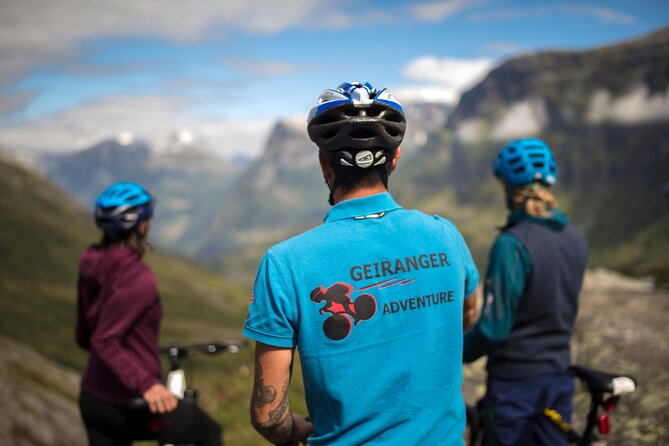
At the lake, staff provide the bike, helmet, bicycle gloves, and visibility vest. You receive technical and safety instructions before starting, along with advice on how to handle the descent. Since there is no guide riding with you, pay close attention at this point. Ask where to go, how to contact the office if something goes wrong, and how to adjust the bike before leaving.
The small maximum of six people is useful here. It should make it easier to check equipment and get moving without the feel of a large excursion group. Still, the quality of the equipment deserves your attention. Some riders have found the bikes easy to manage and in good condition, while one detailed complaint described poorly fitted bikes, worn helmets, sticky brakes, smooth tires, a loose kickstand, and a badly damaged visibility vest.
That is not a reason to reject the ride outright, but it is a reason to inspect your bike carefully. Squeeze both brake levers, test the kickstand, check that the tires look sound, and make sure the seat height is comfortable. Your helmet should fit firmly, and the vest should sit securely. If something feels wrong, speak up before the vehicle leaves.
The 16-Kilometer Coast Toward the Fjord
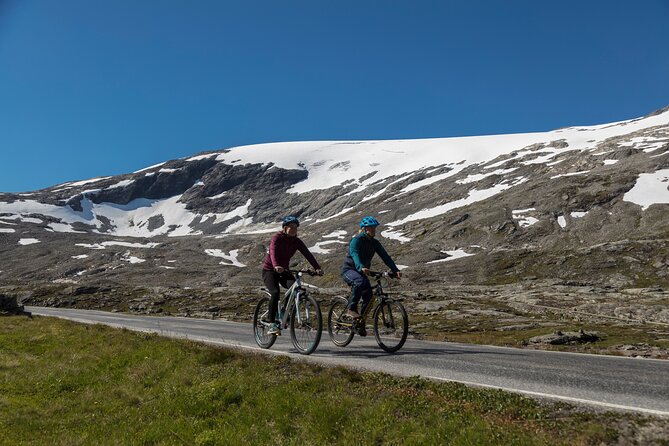
The route covers about 16 kilometers, or nearly 10 miles. Most of it is downhill, so you are mainly controlling speed rather than pedaling hard. This makes the outing suitable for a reasonably active person who can ride a bicycle confidently, even if you are not a serious cyclist.
The road is not a closed cycling route. It is a public mountain road, and there is no shoulder or separate bike path along parts of it. Large buses can pass nearby. That fact should be made clear before you book, especially if you are nervous in traffic or prefer a protected cycleway.
The ride is described as manageable for riders with different skill levels. One older rider, aged 67, found it easy to control the bike over the full route. Another couple found the downhill riding simple, even though one person had less cycling experience. These details point to the real requirement: you need moderate physical fitness and enough confidence to brake, steer, and share the road.
The short uphill stretch is the only part that repeatedly comes up as a physical challenge. You can walk that section if needed. This is not a nonstop freewheel, but it is close. You should not expect a technical mountain-bike course with rough trails or sharp racing turns. It is a scenic road ride with a long, pleasant descent.
Because the ride is unguided, you can travel at your own pace. Faster riders can move ahead, while people who want more photographs can stop. Keep your group together enough to avoid confusion, and make sure you know the route before setting off. The simple instruction to go downhill is not quite enough for everyone, particularly if phone service is weak.
More rides on two wheels around Norway:
- Geiranger Fjord: Downhill Self-Guided Bike Tour
★ 4.5 · 30 reviews - Olden: Fjord e-bike tour
★ 5.0 · 23 reviews - Fjord Sightseeing on Kvaløya With E-Bike
★ 3.0 · 2 reviews
Viewpoints That Make the Ride Worthwhile
The route includes several stops, and each adds something different to the outing.
At the viewpoint below Blåfjell mountain, you get an early chance to pause and take in the steep Norwegian terrain. This is a good place to settle into the ride rather than racing toward the end. The height gives the route its dramatic scale, with the road dropping through mountain country toward Geiranger.
Kvandalls waterfall adds movement and sound to the trip. Waterfalls are easy to appreciate from a vehicle, but arriving under your own power gives you more reason to stop. Bring your phone or camera where you can reach it safely, but do not try to photograph while riding.
The Opplenskedalen Valley section changes the view from open mountain scenery to a more enclosed valley setting. You might find this part less dramatic than the famous viewpoints, but it helps show how the road connects different types of terrain. A downhill ride is at its best when you allow time for these quieter stretches as well as the big photo stops.
Knuten is another named stop on the route. The details of the view can change with weather, light, and visibility, so do not judge the whole outing by one cloudy moment. The experience depends heavily on conditions. On a clear day, the fjord, peaks, waterfalls, and small settlements have the sharp, wide-open look people hope for in Geiranger.
Flydalsjuvet is the headline stop and the listed itinerary point. It is the famous viewpoint most closely linked with the classic Geiranger view, and it gives the ride a strong finish. You may want to save enough time and energy to enjoy it rather than treating it as just another quick roadside pause.
One rider combined the bicycle outing with a hike to Storseterfossen Waterfall, leaving the bikes at the start of the walking route before continuing afterward. That shows the flexibility of the unguided format, but do not assume extra activities are included. The standard outing is the downhill ride, equipment, and transport.
The Unguided Format: Freedom With a Few Duties
The lack of a guide can be a major advantage. You are not tied to a commentary schedule or forced to keep moving past a good view. I like being able to stop for photographs, take the descent slowly, and enjoy the road without a guide calling out every turn.
It also means you have to take more responsibility. Staff do not ride beside you to point out hazards, fix a mechanical issue, or guide you around traffic. One person was not given a clear route explanation at the top, and another had trouble getting a phone number when there was no mobile service.
Before leaving Djupvatn Lake, confirm four things:
- Which direction to take from the drop-off point
- What to do if you get a flat tire
- How to contact the operator
- Where to leave the bike if you stop for a walk
The operator says the ride does not include a guide. That is not a small technical detail. If you want a fully led cycling excursion, this is the wrong format. If you want quiet control over your own schedule, it is one of the strongest parts of the outing.
Equipment and Road Safety Need Your Attention
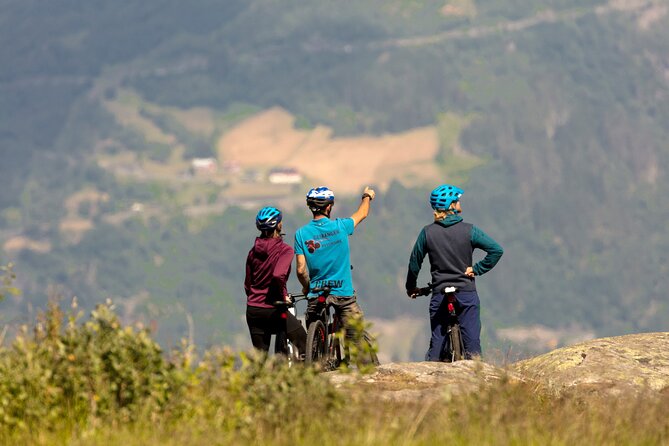
The supplied equipment is meant to cover the basics: bike, helmet, gloves, and visibility vest. This is convenient if you are arriving by cruise ship or carrying little cycling gear. You do not need to arrange a separate rental or pack a helmet.
The feedback on equipment is mixed. Several outings went smoothly, with bikes described as excellent or very good. Another account raised serious concerns about maintenance and fit. Since the provider is Excursions.no and the group size is small, ask staff to correct anything that does not fit before you begin.
Braking deserves special attention. A downhill road demands reliable brakes, and you should not have to anticipate every stop far in advance. Test them at low speed in a safe area. Check that the seat is at a usable height, especially because one complaint said no tools were available for adjustment.
Traffic is the other key issue. The road has no dedicated bike lane in some sections, and buses may pass close to you. Ride predictably, keep to the side when safe, and slow down before bends and viewpoints. If you discover that the road setting makes you uncomfortable, the driver may still be able to stop for photographs, as happened for one person who chose not to continue cycling.
This is not a criticism of the scenery. The views can be superb. It is simply a reminder that beautiful mountain roads are still working roads.
Same fjords, seen another way:
- From Bergen: The Original Fjord Cruise to Mostraumen
★ 4.7 · 8,440 reviews - Stavanger: Electric Fjord Cruise to Lysefjord & Preikestolen
★ 4.6 · 8,385 reviews - Oslo: Oslo Fjord Sightseeing Cruise by Sailing Ship
★ 4.5 · 5,790 reviews - Oslo: Scenic Fjord Cruise with Audio Guide Commentary
★ 4.5 · 5,375 reviews
Is $160.09 a Fair Price?
The listed cost is $160.09 per person. That is not cheap for a two-and-a-half-hour outing, particularly because no cycling guide accompanies you. Part of what you pay for is the transport up the mountain, the bike and safety equipment, the small group, and the access to a route that would be difficult to arrange on your own during a short visit.
The value improves if you are arriving on a cruise stop and want an active way to see Geiranger. The operator handles the uphill transfer, equipment, and return to the meeting point. You also avoid spending the whole time on a crowded sightseeing bus.
The value drops if you expect a guided tour, detailed commentary throughout, or a polished mountain-biking operation. The ride itself is the main event, not instruction or interpretation. One rider considered the price high because the activity involved transport to the top followed by an independent ride.
I would compare this with the cost of other shore excursions, but judge it by the kind of day you want. For a memorable, active view of the fjord, the price may feel reasonable. For a basic bike rental and a short transfer, it may feel steep.
Weather, Timing, and Cruise-Day Planning
The tour lasts about two hours and 30 minutes. That includes transport, equipment preparation, instructions, and the descent with stops. Allow extra care if you plan to add a walk or spend a long time taking photographs.
The outing requires good weather. If poor conditions force a cancellation, you are offered another date or a full refund. This is important in Geiranger, where rain, cloud, and poor visibility can change the ride from a brilliant view to a cold road descent with little to see.
You can cancel for a full refund up to 24 hours before the start time. Changes or cancellations inside that window are not accepted for a refund. The meeting point is in Geiranger, and the activity ends back there, which makes it practical for a short visit when your schedule is tight.
The experience is offered in English, and confirmation is sent at booking. The location is near public transportation. Most importantly, leave enough time after the ride for the return to your ship or next activity. The route is scenic, and stopping often is part of its appeal.
Who Should Book This Ride?
I would choose this for a confident bicycle rider who wants scenery, fresh air, and control over the day. It suits people who would rather coast down a mountain road than sit on a bus, and it works especially well for couples or small groups who want to stop for their own photographs.
It can also suit a less experienced rider, provided you are comfortable steering and braking on a public road. The ride is mostly downhill, and the short uphill section can be walked. Moderate fitness is enough for many people, but comfort around traffic matters as much as leg strength.
I would think twice if you need a guide beside you, dislike riding near buses, or expect pristine equipment every time. Ask for a proper bike check, clear directions, and a phone contact before setting off. Those few steps can make a big difference.
Final Verdict: A Great View With Real-World Conditions
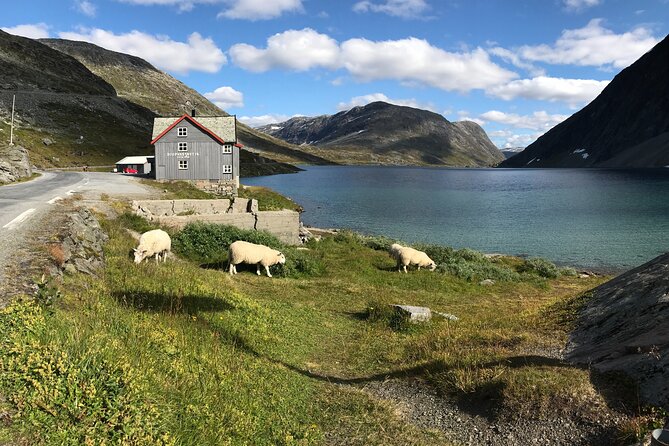
This ride earns its strong reputation for the right reasons: the scenery is outstanding, the downhill format is fun, the route offers plenty of photo stops, and the experience can become a highlight of a Geiranger visit. The freedom to ride at your own pace is a genuine benefit.
I would book it if the road conditions do not bother you and you are happy with an independent ride rather than a guided tour. I would skip it if you want a protected cycle path or guaranteed top-condition equipment. For the best chance of a good day, choose clear weather, inspect everything before leaving Djupvatn Lake, and keep enough time to enjoy Flydalsjuvet without rushing.
FAQ
Where does the downhill bike ride begin?
The activity begins at the meeting point at Geirangervegen 10 in Geiranger. An air-conditioned vehicle then takes you to Djupvatn Lake, 1,030 meters above sea level, where the cycling starts.
How far do you ride?
The downhill route covers about 16 kilometers, or nearly 10 miles.
Is the ride guided?
No. The downhill ride takes place without a guide. You receive technical and safety instructions before starting, then ride independently.
What equipment is included?
A bike, helmet, bicycle gloves, and visibility vest are included.
How long does the activity last?
The experience takes about two hours and 30 minutes.
Is there any uphill riding?
Yes. The route is mainly downhill, but there is a small uphill section. You can walk that part if necessary.
How many people can join?
The activity has a maximum of six participants.
What happens if the weather is poor?
The experience requires good weather. If it is canceled because of poor conditions, you can choose another date or receive a full refund. You can also cancel up to 24 hours before the start time for a full refund.
New on the fjords around Norway
- Grøtfjord, Tromsø. Unique Artic scenic route.★ 5.0 · 2 reviews
- Tromsø: Fjords, Mountains and City Highlights Day Tour★ 4.4 · 11 reviews
- Tromsø: Fjords & Sommarøy Tour with Warm Local Lunch Option★ 5.0 · 7 reviews
- Tromsø: Fjord Tour and Visit to Sommarøy with Expert Tour Guide in Italian★ 4.5 · 2 reviews
- Tromsø: Fjord tour in a minibus to Sommarøy with fishsoup★ 5.0 · 8 reviews
- Tromsø: Fjord Sightseeing in a Tesla X Luxury Electric Car★ 4.3 · 19 reviews
- Tromsø: Senja Fjord Tour in Chinese/English Small-Group★ 4.8 · 12 reviews
- Tromsø Fjord Cruise – With a stop at Sommarøy Island★ 3.3 · 12 reviews
Andalsnes Fjord Tours, the closest matches.
Guided kayak tour “The Seven Sister Tour” on the Geiranger Fjord – 4 h
Read our review →
Geiranger Fjord Tour (Geiranger-Hellesylt one way)
Read our review →
Also listed under