
Review · SWEDEN
7-Day Scenic Scandinavian Tour from Stockholm exploring Denmark, Sweden and fjords in Norway
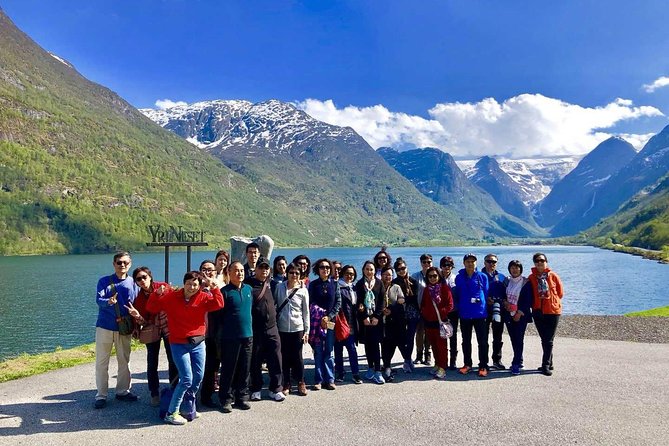
The real draw here is the sheer variety packed into seven days: a Norwegian glacier, a fjord cruise, the Flåm Railway, Oslo and Copenhagen, Swedish coastal culture, and Stockholm’s grand public buildings. You cover roughly 3,500 kilometers, so this is a moving tour, not a slow stay in each place.
I like that transportation and hotels are handled for you, especially across three countries with different rail, road, and ferry connections. I also like the mix of nature and city sights, from Briksdal Glacier and Sognefjord to Copenhagen’s Amalienborg Palace and Stockholm’s Vasa Museum.
The tradeoff is simple: the route is long and often fast. Some days involve many hours on the coach, and the basic hotels may not satisfy anyone seeking stylish or central lodging. Guides such as Lux and driver Gregory have been praised for their help, but the tour may combine English and Chinese-speaking groups on one bus.
Key points to know before booking
- A 3,500-kilometer Scandinavian loop: You begin and end at Stockholm Central Station, with Norway and Denmark in between.
- The strongest natural sights: Briksdal Glacier, Jostedalsbreen National Park, Mjøsa Lake, Sognefjord, and the Flåm Railway.
- Six breakfasts included: Lunches, dinners, attraction tickets, and optional activities cost extra.
- A small maximum group: The tour allows up to 15 people, although English and Chinese groups may share transport.
- Fast sightseeing in the capitals: Oslo, Copenhagen, Gothenburg, and Stockholm each receive a short city visit rather than a full stay.
- Plan for extra costs: Mandatory tips total €70 per person, and accommodation before the first night and after the final day is not included.
Why this route works for first-time Scandinavia
Scandinavia is easy to enjoy but not always easy to arrange. Distances are large, hotel prices are high, and the best fjord areas require a mix of coaches, boats, and mountain railways. This tour removes much of that planning.
For $1,169.51 per person, you receive six nights of accommodation, six breakfasts, daily coach transport, a professional driver, and a tour manager. That is a reasonable package price for the ground covered, though it is not an all-inclusive holiday. Add €10 per person per day for mandatory gratuities, plus meals, entrance tickets, and any optional activities.
I would think of this as a Scandinavian sampler. You will see major sights and get a useful first look at three countries, but you will not have long, lazy afternoons in each city. If your goal is to return later and explore Copenhagen, Oslo, or Stockholm in depth, this route can show you where to spend that extra time.
The group maximum is listed as 15 people, which is much more manageable than a large coach tour. Still, goEUgo may combine English and Chinese-speaking customers when numbers are low. One tour leader may speak both languages, so ask about the language arrangement before you pay if that matters to you.
More week-long trips around the world:
Day 1: From Stockholm to Mjøsa and Lillehammer
The meeting point is Stockholm Central Station, at Centralplan 15, with an 8:30 a.m. start. The first stretch takes you toward Norway and Mjøsa, Norway’s largest lake.
Lillehammer is known for hosting the 1994 Winter Olympics, and the surrounding area offers broad views and a quieter northern feel. The plan is to arrive in the evening and sleep in Lillehammer or nearby. Keep one detail in mind: this stop does not include a visit to Lillehammer city center. It is mainly a useful overnight point on the way west.
The long opening drive sets the tone. You save the trouble of arranging a cross-border transfer, but you spend much of the day seated. Bring a small bag with water, medication, and anything you need during the ride, since each person may bring one piece of luggage up to 30 kilograms and one small carry-on.
Day 2: Briksdal Glacier and Jostedalsbreen National Park
This is one of the route’s best days. After breakfast, you head toward Briksdal Glacier, described as one of Europe’s largest glaciers. The figures supplied for the glacier are striking: around 800 square meters in coverage, a deepest point about 400 meters below sea level, and a high point near 2,000 meters above sea level.
The exact glacier experience depends on the included arrangements and available tickets. The plan refers to cable cars around Jostedalsbreen National Park, followed by about 10 minutes of free time to take pictures and view the glacier more closely. That is enough for a memorable stop, but not enough for an independent hike or a long mountain visit.
Jostedalsbreen National Park adds more than ice. You can expect clear streams, rushing rivers, waterfalls, and mountain scenery around the glacier area. The contrast with the cities later in the week is what makes this route appealing.
After the glacier stop, the coach continues south toward Gudvangen. Accommodation is in or near the planned overnight area. Hotel details are supplied only 24 to 48 hours before check-in, so you should be comfortable with some uncertainty about the exact property.
Day 3: Sognefjord and the Flåm Railway
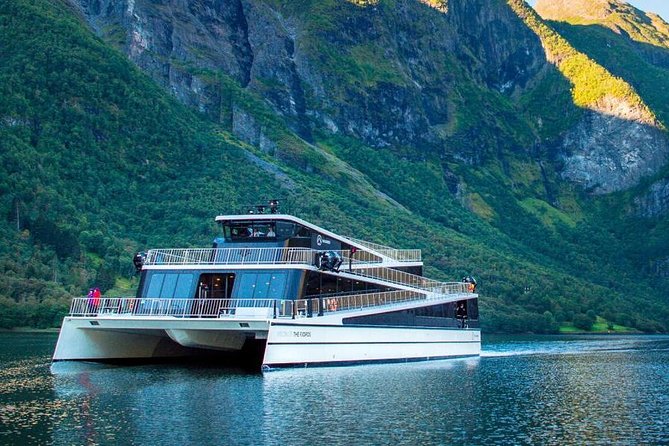
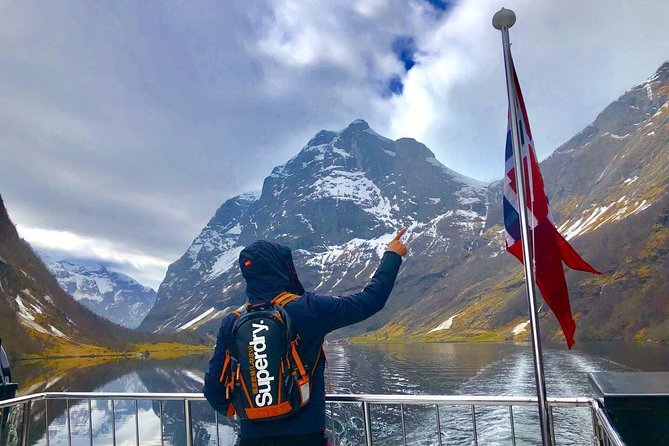
The Sognefjord cruise is the centerpiece of the third day. From Gudvangen, you board a sightseeing boat and spend about two hours among the fjord scenery before arriving at Flåm.
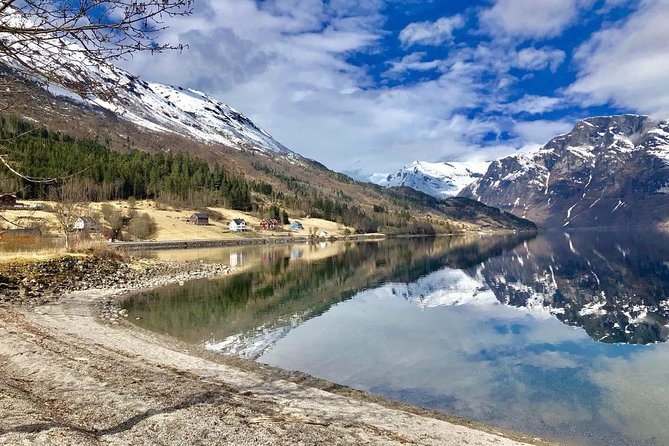
Sognefjord is described as the world’s longest and deepest fjord. On a boat, you get a better sense of the steep walls and waterways than you would from a road. This is one of the places where the coach tour earns its keep: arranging the correct dock transfer and connecting it with Flåm by yourself can take more work.
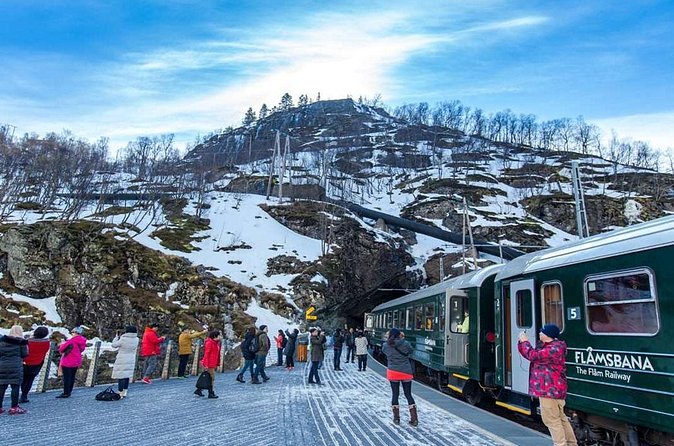
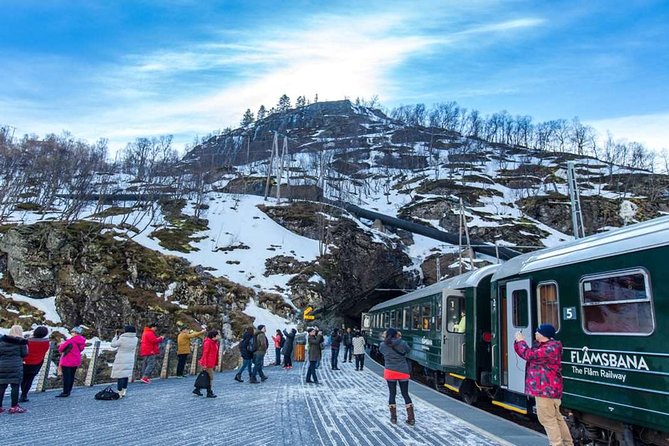
After lunch, the Flåm Railway provides another strong scenic experience. The route is famous for waterfalls, valleys, and fjord-country views. The train ride is not just a transfer. It is one of the main reasons this region attracts people from around the world.
The weak point is time. A fjord cruise, lunch, railway ride, and return to the hotel make for a full day. You will see a lot, but you should not expect much quiet time in Flåm itself. Lunch is not included, and a paid lunch option of about €30 has been described as poor value. I would use the tour leader’s advice and choose a local café or service-station restaurant instead.
More Fjord Tours around the world:
- From Bergen: The Original Fjord Cruise to Mostraumen
★ 4.7 · 8,440 reviews - Stavanger: Electric Fjord Cruise to Lysefjord & Preikestolen
★ 4.6 · 8,385 reviews - Oslo: Oslo Fjord Sightseeing Cruise by Sailing Ship
★ 4.5 · 5,790 reviews - Oslo: Scenic Fjord Cruise with Audio Guide Commentary
★ 4.5 · 5,375 reviews
Day 4: Oslo, City Hall, and Vigeland’s sculptures
The route turns east toward Oslo, Norway’s capital. The city is linked with the Nobel Peace Prize, presented there each December 10, while the other Nobel prizes are awarded in Stockholm.
The planned city visit includes Oslo City Hall and Frogner Park, home to Vigeland Sculpture Park. The park contains more than 212 bronze and granite sculptures focused on human relationships and the human condition. Figures of adults, children, and couples give the visit a more personal feel than a standard monument stop.
Vigeland Park is a good choice for a short visit because you can understand the theme without needing a museum tour. The repeated human forms also give you something distinctive to remember from Oslo.
You should watch the timing here. The stated plan gives roughly an hour to the main stops, and one account of the experience found too much waiting in Oslo during cold weather. If you want long museum visits, shopping, or a relaxed café break, this day may feel stretched in the wrong way. The tour gives you an introduction to Oslo, not a full city stay.
Day 5: Gothenburg’s Poseidon and fish market
The coach heads south into Sweden and Gothenburg, a major port on the country’s west coast. The stop at Götaplatsen centers on Carl Milles’ seven-meter statue of Poseidon, unveiled in 1931. The statue caused a local stir because of its exaggerated proportions, including its long legs and oversized anatomy.
That slightly odd detail gives the square some character. You are not simply checking off another grand building. You are seeing a piece of local public art with a story attached.
The next stop is Feskekôrka, whose name means fish church in Swedish. This indoor market is associated with fish and shellfish, and it offers a chance to look at Gothenburg’s coastal food culture. The route then includes Gothenburg Cathedral before continuing to Copenhagen in the evening.
This is another day when the coach does most of the work. You get a taste of Gothenburg, but not enough time to make it your own. If seafood appeals to you, save room for a purchase at the market, though personal food costs are extra.
Day 6: Copenhagen’s symbols and royal quarter
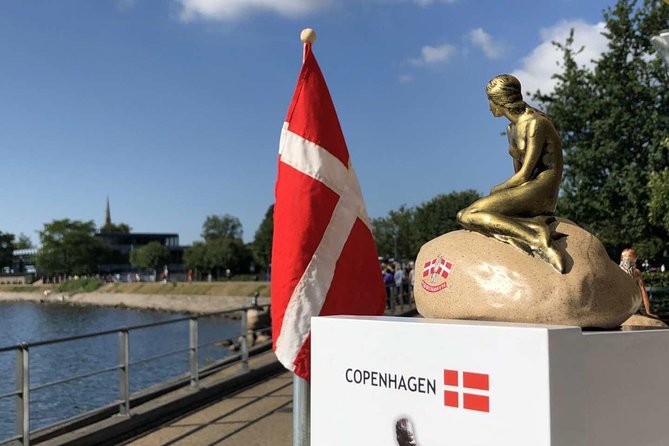
Copenhagen receives more recognizable sights than Gothenburg. The morning begins with the Little Mermaid, the statue inspired by Hans Christian Andersen’s fairy tale. It is small, exposed to the harbor, and often busy around the viewing area, so keep your expectations sensible. Its value is symbolic rather than grand scale.
Amalienborg Palace follows. The palace complex consists of four matching buildings around a square and is considered a leading example of Danish Rococo design. If timing works, you may see the ceremonial changing of the guards in the afternoon.
The Hans Christian Andersen stop connects the city’s streets with the writer’s life and work. His statue sits on City Square, and the tour places this visit after the Little Mermaid, making the literary link clear.
After lunch, you begin the long drive back toward Stockholm. This is the day I would most like to adjust. One day in Copenhagen can feel short, especially when part of the afternoon is spent preparing for the return journey. If Copenhagen is your main reason for booking, consider adding independent nights before or after the tour.
Day 7: Stockholm’s City Hall and the Vasa Museum
The final day returns to Stockholm, a city built across 14 islands on the Baltic Sea. The city tour includes Stockholm City Hall, the building used for the Nobel Banquet.
The Blue Hall leads to the Golden Hall, where more than 18 million glass and gold mosaic pieces cover the walls. It is an impressive final stop because it combines ceremony, design, and Swedish public life in one building. Entrance is not included in the tour price, so check which visits require additional tickets before the day begins.
The route also includes the old Parliament building, the Vasa warship, and Storkyrkan cathedral. The Vasa is especially memorable because the preserved warship gives the city tour a physical centerpiece. Storkyrkan adds a historic church setting in the old city area.
There is no hotel on the final night. The activity ends back at the meeting point, so arrange your Stockholm accommodation in advance. Do not assume you can board a late flight the same evening unless your own schedule leaves plenty of room after the city tour.
Hotels, meals, and the real cost
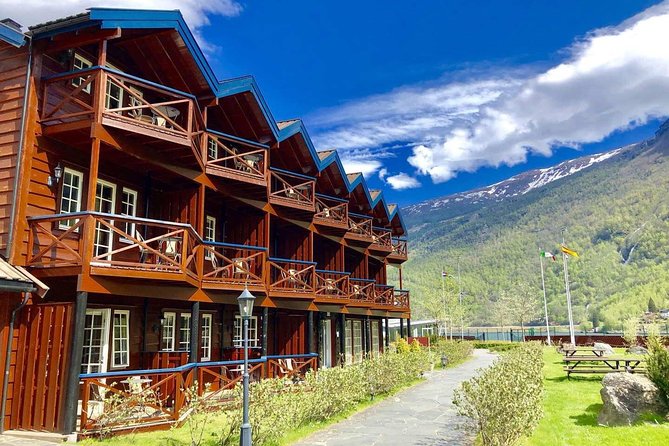
Accommodation is in comfortable 3-star hotels, with private facilities and twin, double, or single rooms. A standard twin room is the default, and a double bed may be requested. One twin room can hold two adults and one child aged 2 to 11 without a separate bed, but groups of three adults should not expect a triple room.
The hotel standard may vary, and some properties may be basic. That is common on a route crossing several countries, but it matters if you prefer central hotels with plenty of nearby dining choices.
Six breakfasts are included. Lunch and dinner are not, and the tour manager can help with restaurant reservations, cafés, and service-station stops. Budget for meals each day instead of treating the advertised price as the final cost.
At $1,169.51, the package is strongest for someone who values convenience. You are paying to avoid arranging five different hotel areas, cross-border road transfers, a fjord boat, and a scenic railway connection. The value is less convincing if you prefer to travel slowly or choose your own restaurants and hotels.
Who should book this seven-day tour?
I would recommend it to a first-time visitor who wants a broad introduction to Scandinavia and does not want to drive. It suits people who enjoy scenic transport, short city visits, and a clear daily structure.
It is also useful for solo visitors who prefer arranged transport and a tour manager. The small maximum group can make the social side easier than a huge coach tour, though the possible bilingual group setup is worth checking.
I would hesitate if you want time for museums, independent walks, nightlife, or long meals. The coach route is demanding, and the cities are sampled rather than explored. Families should also consider the long driving days and the room rules for children.
The mandatory gratuity is €10 per person per day, or €70 for the seven-day program, and it is paid separately. Visas, travel insurance, attraction tickets, personal expenses, and accommodation before the first day and after the last day are also your responsibility. Your passport should be valid for at least six months, and children under 18 must travel with an adult.
Should you book it?
Book this tour if your priority is seeing the big Scandinavian highlights with minimal planning. The fjord cruise, Briksdal Glacier, Flåm Railway, Vigeland sculptures, and Stockholm’s Vasa Museum give you a strong range of experiences for one week.
Skip it if you want a relaxed holiday. The route covers a great deal, but that means long coach rides, short stops, uncertain hotel locations, and limited free time in Oslo and Copenhagen. The smartest approach is to add an extra night in Stockholm at the beginning and end, then treat this tour as a well-organized introduction rather than your complete Scandinavian experience.
FAQ
Where does the tour begin?
The tour begins at Stockholm Central Station, Centralplan 15, 111 20 Stockholm, Sweden.
What time does the tour start?
The stated start time is 8:30 a.m.
Where does the tour end?
The activity ends back at the Stockholm Central Station meeting point.
How long is the tour?
The tour lasts approximately seven days.
Which countries does the tour visit?
The route covers Sweden, Norway, and Denmark.
How many breakfasts are included?
Six breakfasts are included.
Are lunch and dinner included?
No. Lunch and dinner are not included, although the tour manager can assist with restaurant and café arrangements.
Are attraction tickets included?
No. Attraction admission tickets and optional activities are not included in the tour price.
Is hotel accommodation included on the final night?
No. Accommodation before the first day and on the final day is not included.
How much luggage may each person bring?
Each person may bring one piece of luggage weighing up to 30 kilograms and one small hand-carry item, such as a purse, backpack, or camera bag.
Is the tour available in English?
Yes. The tour is offered in English, but English and Chinese-speaking groups may be combined on one bus when group numbers are low.
What is the cancellation policy?
You can receive a full refund if you cancel at least three full days before the experience start time. Cancellations or changes made less than three full days before departure are not accepted for a refund.
New on the fjords around the world
- Vrsar: Lim Fjord – Rovinj Fish Picnic★ 4.9 · 15 reviews
- Grøtfjord, Tromsø. Unique Artic scenic route.★ 5.0 · 2 reviews
- Tromsø: Fjords, Mountains and City Highlights Day Tour★ 4.4 · 11 reviews
- Tromsø: Fjords & Sommarøy Tour with Warm Local Lunch Option★ 5.0 · 7 reviews
- Tromsø: Fjord Tour and Visit to Sommarøy with Expert Tour Guide in Italian★ 4.5 · 2 reviews
- Tromsø: Fjord tour in a minibus to Sommarøy with fishsoup★ 5.0 · 8 reviews
- Tromsø: Fjord Sightseeing in a Tesla X Luxury Electric Car★ 4.3 · 19 reviews
- Tromsø: Senja Fjord Tour in Chinese/English Small-Group★ 4.8 · 12 reviews
Sweden Fjord Tours, the closest matches.

Explore the Norwegian Fjords and the Wildlife from Abisko.
Read our review →
Also listed under